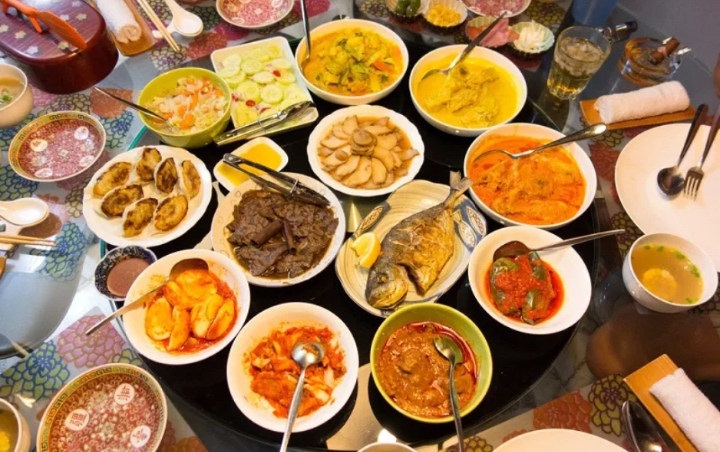
Some of us often understand that good deeds are limited to prayer, fasting, almsgiving and dhikr. However, the Koran invites us to understand more deeply about the quality of charity which cannot stand alone but is greatly influenced by things that are considered trivial, namely what we eat. In QSAl-Mu’minun verse 51, Allah SWT says:
يَا أَيْ٠هَا الرْ٠س٠ل٠ك٠ل٠وا Ù…Ù Ù†ÙŽ الطَْي٠ْبَات٠وَاعْمَل٠وا صَال٠Øًا Û– إ٠ن٠ْي ب٠مَا تَعْمَل٠ونَ عَل٠يمٌ
“O messengers, eat good food and do charity. Indeed, I know what you do.”
This verse is not only addressed to the apostles, but is also an important lesson for us humans. This verse is also very interesting for us to think about, because Allah does not first order His servants about good deeds, but precedes it with the command to consume healthy food. thoyyib. This is an affirmation that valuable righteous deeds cannot possibly come from the polluted source of life in our bodies.
Apart from being a necessity, food from an Islamic perspective is a foundation for worship. What enters our bodies will influence the clarity of our hearts, the strength of our souls and actions. Of course, halal food alone is not enough, it must be thoyyib; good, clean, healthy and obtained in the right way.

Deep thoyyib food Tafsir al-Qur’an n al-‘AẓīmIbn Kathir is food that is not obtained through injustice, fraud or violation of other people’s rights. So herein lies the problem of modern people like us today. Many of us are diligent in worshiping, but neglect to ask about the origins of our sustenance. There are salaries obtained from fraud, corruption, and manipulation which are normalized, while prayers for good fortune are still offered. In fact, how can hands dirty with dishonesty be raised with the hope that the prayer will be answered?
The food we consume not only shapes the body in terms of health but can also shape the character. When we often consume food that is haram or that we have doubts about, our hearts will slowly harden. On the other hand, when we can maintain and ensure that food is halal and thoyyib So pious deeds are done with sincerity, a calm heart and a peaceful soul. So this is the lesson from Surah Al-Mu’minun verse 51, namely connecting the purity of the stomach with the purity of deeds.
Not only about food, this verse can also be read as social criticism, especially in society where we often encounter paradoxes; people who appear religious, diligent in worship but also do not hesitate to cheat, corrupt or abuse their position.
According to Tafsir al-Qurá¹ubÄ«This verse shows that pious deeds will not be accepted if they are not accompanied by the purity of the source of sustenance. Therefore, this is an important reflection for us, especially students and educated people, that education must give birth to integrity, not just ingenuity used to outsmart and deceive the system.
From QS Al-Mu’minÅ«n verse 51 actually invites us to build complete piety, namely piety that combines worship, ethics and social responsibility. Islam not only regulates human relationships with Allah, but also human relationships with fellow humans through economic justice.
In this context, improving oneself is not enough just to listen to lectures or just perform worship. It must start from ethical awareness in earning a living, working honestly, and ensuring that we do not take away other people’s rights, let alone our food.
So the reflective questions we should ask are not only, “Have I done charity?†but also, “Where does the source of life that I put into my body come from?” Because in Islam, the sanctity of charity is never separated from the sanctity of the source of life. In the end, our faith is not only tested at the edge of the prayer mat, but also at the dining table and in the workroom where sustenance is sought. The Koran repeatedly reminds us that the command to be devout often coexists with the command to maintain what is lawful and lawful thayyibas if to emphasize that true piety is born from the most basic awareness.
When we start to ignore the origins of our sustenance, it is easy for charity to lose its spirit and religion – it is only written on the KTP. So, building a life of faith is not just about increasing external worship, but rather ensuring that every prayer, work and meal grows from a clean source and is approved by Allah SWT.
Also Read: Isn’t Tasting Food While Fasting Makruh?
Author: And when Happy
Editor: Sutan
News
Berita Teknologi
Berita Olahraga
Sports news
sports
Motivation
football prediction
technology
Berita Technologi
Berita Terkini
Tempat Wisata
News Flash
Football
Gaming
Game News
Gamers
Jasa Artikel
Jasa Backlink
Agen234
Agen234
Agen234
Resep
Download Film